
Two things happened this weekend that seemed to be in conversation with one another.
The first was that Oasis came to Melbourne, continuing their world tour of bangers from the 90s.
The second was the LA Dodgers won the World Series in a classic Game 7.
I watched Game 7 at a friend’s house having been at Oasis the night before and, in between hooting and hollering at one of the most electric sporting events either of us had ever seen, we discussed whether Oasis would ever get back in the studio and do new music?
We decided that we he hope not.
It’s great that they’re back together, and they still sound great live, but we don’t need anything new from them.
Culture, especially music, can be of a time and of a place.
That time and place can be transported, but because the industry is necessarily always producing the next thing, not everything has to adapt with the times.
There’s something for the times, like Lily Allen crucifying David Harbour or some other fizzy girly pop that is perfect for a time when everything else feels so heavy.
But then there’s also space for Oasis, who can come back, play the same songs just as well as they did, and the business can keep rolling on.
Two things can happen at once, music can live in the past, because the present and future is guaranteed.
But in sport, that isn’t true, they need to adapt or they die.
Up until a few years ago, baseball was in the process of dying a slow death.
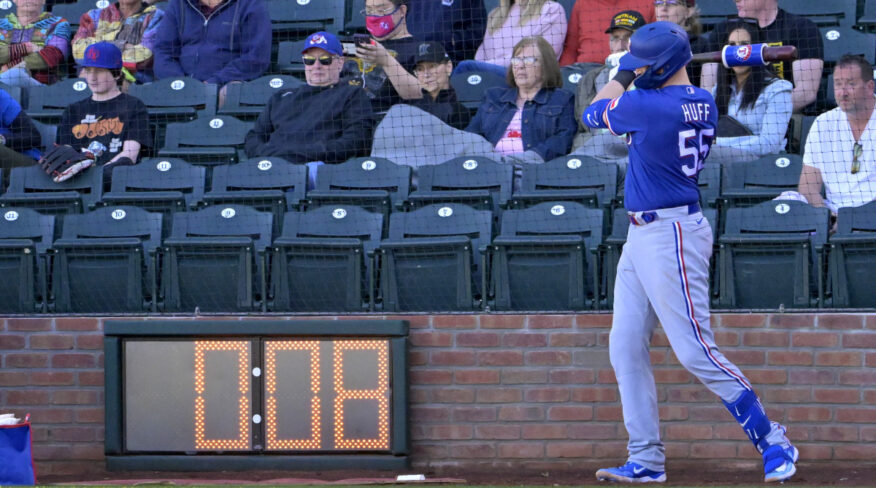
But recently, the MLB has tinkered at the edges of the foundation of the game by introducing a pitch clock and standardising the rules of the AL and NL to make the game’s pace fit the modern world.
They didn’t get stuck in the past and how the old stagers would have fared.
They weren’t hampered by the nostalgia of a pitcher and catcher speaking in hand signals before throwing a pitch and non-extra innings games stretching into a ninth hour.
They changed.
The results, throughout this season and postseason, have been spectacular.
Which brings me to boxing, a sport that constantly refuses to update itself because it can’t.
Reports are that Floyd Mayweather and Manny Pacquaio are expected to fight again next year, over a decade after they fought a decade too late.
This comes a year after the biggest commercial fight in boxing was the Jake Paul v Mike Tyson event, and just before Jake Paul v Gervonta Davis event, which was originally scheduled for two weeks’ time but is in trouble because Davis has predictably committed another crime.
Mayweather and Pacquaio coming back together isn’t the Gallagher brothers reuniting, it’s trying to bring back Kurt Cobain.
There’s no going back to something that’s dead.
In sport, especially combat, you need evolution not devolution.
These “has the old guy still got it?” events cannot be the lifeblood of the sport, but they seem to be becoming it.
To that end, commercially Mayweather v Pacquaio is still probably the biggest fight that can be made.
The fact is guys get old and their skills erode.
They can’t hide when they’re in the ring, and the highlight packages of their legendary nights from two decades ago look like distant memories compared to what they are now.
But more than that, there’s nowhere to go after they fight.
It’s just two old men fighting, with no long-term prospects in the sport, they fight just for the sake of getting paid.
They’re bottle events that all feel like going out of business sales.
Despite that, boxing and boxers are obsessed with the way back machine, and their constant agitating to return, or being agitated to return, arrest the development of the sport.
There’s no need to create new stars when you can just wheel last decade’s stars back out.
That’s not to say that there haven’t been stars or great fights. Canelo Alvarez is an obvious star, but on a smaller level the Parker v Wardley fight last weekend was a banger.
On the whole, however hasn’t been enough evolution in the sport to say that “we don’t need these shows.”
The UFC, unlike boxing, has been far less willing to indulge its history, maybe even to its detriment.
The genius of the UFC has always been the forward looking stakes on every event.
You know, or knew, what would happen next after each event.
But even they, in an attempt to create a bit of value for their new broadcast partner, are trying to coax the past back into the present by bringing 2016’s stars – Conor McGregor and Ronda Rousey – to a 2026 audience.
It’s a trap, and one the UFC shouldn’t step into.
Once you get into the business of nostalgia in sport, it’s hard to get out of it.
Every nostalgia-heavy event you put on might make money, but it will lack the stakes that makes the next show even bigger.
Music and sport are different.
One is competition, and one is pure performance and nostalgia only works in one of those realms.