Sometimes you mess up at work, sometimes you embarrass yourself in front of your colleagues, but have you ever been sacked inside your first few weeks?
It’s no secret that modern-day football is cut-throat and bloody when it comes to managerial decisions, but now we’re entering dangerous territory.
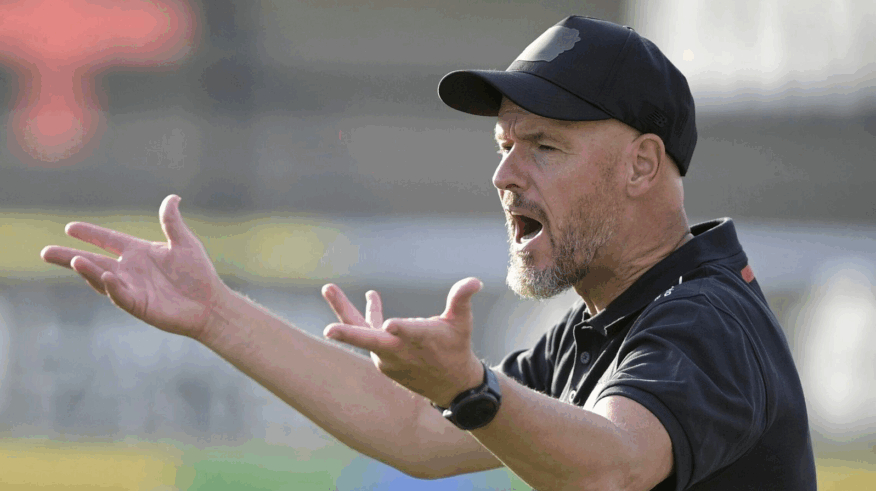
Erik Ten Hag has been dismissed from his role at Bayer Leverkusen after just three competitive games in charge.
He was given just 63 days to fill Xabi Alonso’s shoes before the club ultimately decided he wasn’t the one.
But what can anybody do with such a short window to succeed?
Especially when half his team was sold.
Even the worst colleague you’ve ever had was given a six-month probation period before being given the boot.
The results, of course, were far from perfect.
But we all know good things take time.
Their preseason was nothing special: a few straightforward wins and two defeats.
A 4-0 victory in the DFB Pokal in Ten Hag’s first competitive fixture, but an unexpected defeat against Hoffenheim at home in the opening weekend of the Bundesliga left fans missing their former manager.
Ten Hag’s second game in charge saw the Black & Reds surrender a two-goal lead in the 94th minute against Werder Bremen.
That, apparently, was enough to bin the project before it had really started.
And so it goes that the once highly-sought-after coach who led Ajax’s renaissance and UCL Semi-Final run in 2019, and led Manchester United’s worst squad to an EFL Cup title and an FA Cup title, has been cast aside again.
As the demand for instant action and immediate results becomes more prominent in today’s highly competitive landscape, the margin for error is almost zero inside some of football’s most elite clubs.
And while Bayer Leverkusen are no doubt desperate to cling to the high platform that Xabi Alonso erected, is football becoming too cutthroat at the top?
No doubt there was more than meets the eye in this particular case; however, the question remains: are managers across Europe given too little time to implement their philosophies and make a genuine impact?
Aside from the powerhouse managers like Pep Guardiola, Jurgen Klopp, Diego Simeone and co, who are all given the freedom to depart their respective clubs on their own terms.
What about the rest?
It’s a simply ridiculous notion to expect a top-level manager to arrive at a new club, with players they do not know, and expect them to transform the club culture completely overnight.
There is a total lack of understanding of the time and practice it takes to implement a new footballing style or philosophy, and for your team to build the tactical familiarity and cohesion required to deliver on the field.
Where managers could once build a successful dynasty over a number of years, today’s head coaches now find themselves racing against the clock, with quick results and band-aid solutions taking precedence over stable, long-term building.
Sure, sometimes certain managers will step in and build instant success, and perhaps that gives the rest of the world a notion that immediate success is easy with the right coach in charge.
But there’s no one-size-fits-all approach.
Hansi Flick led a wounded FC Barcelona to a domestic treble and four straight El Clásico victories, and Arne Slot made the departure of Jurgen Klopp feel lighter by delivering a Premier League title in his first season.
But both of those coaches entered with crystal clear foundations in place to build upon.
Besides, not all projects catch momentum that quickly, and shuffling managers like a deck of cards is never going to deliver sustainable results.
Manchester United are a fine example of that.
Sir Alex Ferguson led one of the most iconic dynasties in football history in his 27-year spell with Manchester United, leading them to 13 Premier League titles and two Champions League titles.
Since his departure in 2013, the Red Devils have seen eight different managers take the mantle, with failure following each one out the door.
Some simply weren’t the right fit, some dealt a difficult hand, and some are being fed to the wolves.
Jose Mourinho, with his Europa League title, EFL Cup, and Premier League runners-up position has no doubt been their most successful manager since, but even he couldn’t fix the rot that has spread through the club over the last decade.
Ten Hag looked set to lead the revolution when he joined the club after an incredible stint with Ajax, but was ultimately dismissed after just over two years in charge.
And now, Ruben Amorim, who joined the Red Devils after a fantastic spell with Sporting Lisbon, is one of the favourites to be the next manager sacked in the Premier League.
Less than a year since his arrival, with little time to brew a remedy for the poison within, Manchester United look set to scrap another project.
Marcus Rashford, who recently escaped the club to join FC Barcelona on loan, has said himself that Manchester United have never entered a transition period, and that they are stuck in ‘no mans land’ because they refuse to stick to a manager and commit.
And speaking of quickly-dismissed managers, who can forget Ange Postecoglou.
A man who came with an extraordinary vision, brought a bit of spirit back to Spurs, won a Europa League title in his second season (ending a 17-year drought), and was unceremoniously sacked shortly afterwards, dispute having the players firmly in his corner.
Yes, these managers didn’t necessarily appear to be taking their clubs back to the promiseland with an immediacy, but a rebuild takes time, and it’s not like replacing them is making any difference on the field anyway.
Clubs like Liverpool, Manchester City, and Arsenal, in the last ten years, have committed to their manager and their gameplan, trusting the process, signing players to suit their system, and have rightly been among that top teams in England each year.
Meanwhile, clubs like Manchester United, Chelsea, and Tottenham bounce up & down each year without a clear strategy.
Sure, they win the odd trophy and enjoy short surges of quality, but nobody would call any of these teams consistent or concerning.
The bottom line is that managers are no longer given enough time to succeed, and club’s are repeating the same failing processes over and over again while waiting for a miracle.
Pick a manager that fits, put your trust in them through thick and thin, and trust the process.