While football fans have always recognised the English Premier League as the biggest league in world football, there was a period where even their finest sides couldn’t get close to La Liga’s giants.
For almost two decades, from the early 2000s to the early 2020s, La Liga teams have been at the forefront of European football, dominating on the UEFA Champions League and Europa League stages despite fierce competition.
In fact, it took Chelsea’s UEFA Conference League victory over Real Betis to end a 24-year record of Spanish teams triumphing in major finals.
In the previous 27 major finals containing Spanish sides, the Spaniards were victorious on every occasion.
Their last defeat came in 2001, when Valencia lost their Champions League Final against Bayern Munich on penalties.
Since the turn of the century, Spanish teams have won 11 of the 25 Champions League titles contested, including winning seven during a ten-year period at the height of their supremacy.
Barcelona, in the finest era in their history, managed to win four UCL titles, while Real Madrid lifted seven since the year 2000, including a famous three-peat at the height of their powers.
Atletico Madrid in that period also made two UCL Finals, falling at the final hurdle on both occasions.
The story was the same in the Europa League, with La Liga teams winning 12 of the last 25 Finals.
Sevilla secured an iconic three-peat in 2016, winning seven titles in total, Atletico Madrid lifted the trophy three times, while Valencia and Villarreal won it once each.
And 13 of the last 25 editions of the UEFA Super Cup have been won by the above Spanish sides.
But it’s not the silverware that put Spanish football at the top of the world, it was the icons.
La Liga boasted some of the most iconic players, the most iconic coaches, and the most iconic squads in football history.
From total world-beaters and legends to streets-won’t-forget stars, La Liga was steeped in football heritage.
The early 2000s were marked by Real Madrid’s Galacticos, with the likes of Luis Figo, David Beckham, Ronaldo, and Zinedine Zidane all starring for Los Blancos.
Then came the arrival of Ronaldinho to pave a new era at FC Barcelona, followed by the triumph of La Masia and one of the greatest generations in football history.
The emergence of Lionel Messi, Andrés Iniesta, Xavi Hernández, Gerard Piqué, Carles Puyol, Sergio Busquets, Pedro, and Víctor Valdés all went on to mark a decade of dominance for the Catalan giants.
When Cristiano Ronaldo joined Real Madrid and kicked off the Messi vs Ronaldo rivalry that would span more than a decade, we entered a period of La Liga dominance that saw Messi and Ronaldo trade the Ballon d’Or every year until Luka Modric, who was also a La Liga star at Real Madrid, lifted the golden ball.
Pep Guardiola at Barcelona and Jose Mourinho at Real Madrid marked one of the greatest rivalries in football history, with the stakes and tensions in El Clásico reaching an all-time high between 2011 and 2012 as both sides sought to destroy each other on the field and in the press rooms.
Even when both coaches departed, the battle continued with Luis Enrique and Zinedine Zidane marking two sensational eras for their respective sides.
Barcelona won a second treble in 2015, and Real Madrid responded with a three-peat of UCL titles.
While Real Madrid and FC Barcelona stole the headlines with Ronaldo and Messi at the helm, trading every imaginable record in football, there were plenty of other Spanish sides making their mark on the game.
Valencia’s cult-classic 2005-2010 team, featuring the likes of David Villa, David Silva, Juan Mata, Ever Banega, and Pablo Aimar, won the Copa Del Rey in 2008.
Atletico Madrid’s Europa League-winning squad from 2012, featuring Thibaut Courtois, Diego Godin, and Radamel Falcao, and their 2016 UCL-finalists featuring Antoine Griezmann, Fernando Torres, and Yannick Carrasco.
Unai Emery’s Sevilla included the likes of Ivan Rakitic, Carlos Bacca, Kevin Gameiro, Vicente Iborra, and Grzegorz Krychowiak.
Most recently, Athletic Club’s entirely Basque 2024 Copa Del Rey-winning side, featuring brothers Inaki Williams and Nico Williams, alongside Oscar de Marcos, and Iker Muniain will no doubt find their place in Spanish folklore.
But in recent years, La Liga’s stock at the top of the world has plummeted, and even Real Madrid’s recent Champions League triumphs have grown stale to all but the Los Blancos faithful.
Cristiano Ronaldo’s departure to Juventus in 2018 was the first domino to fall, immediately taking the heat out of the Messi vs Ronaldo El Clásico duels.
The loss of one of football’s greatest icons, followed by the swift and brutal decline of Barcelona between 2019 and 2023, was devastating.
With €1.35 billion of debt, and the impact of COVID-19 on the club’s already red financials, led to the stunning departure of Lionel Messi, against his will.
In a move that sent shockwaves around the globe, Lionel Messi was forced out of his boyhood club in 2021.
With Neymar having departed for PSG in 2017, La Liga had now lost its three biggest stars, and the spotlight that had shone on them during the 2010s was now dwindling to a low burn.
It was now on Real Madrid to bring attention to La Liga, and in that period, there was nobody but Real Madrid fans who even liked them, it was the end of an era.
In the last five years, while La Liga was ‘falling off’, Premier League sides were waking up.
The likes of Liverpool, Manchester City, and Arsenal have been capturing attention with their respective projects, and iconic managers like Pep Guardiola, Jurgen Klopp, and Unai Emery were dominating with their respective clubs.
FC Barcelona vs Real Madrid was eclipsed by Liverpool vs Manchester City, and Mohammed Salah, Erling Haaland, and Cole Palmer have been lighting up the world.
And at the same time, Serie A was thriving under the downfall of Juventus.
Suddenly, Inter Milan were alive again, winning two Scudettos and making two UCL Finals, AC Milan were back again for a period that saw them win the Serie A title for the first time in over a decade, Atalanta conquered the Europa League, and Napoli lifted their first title since Diego Maradona himself (and then did it again).
The Bundesliga has continued to be a one-horse race with Bayern Munich winning every year, until Bayer Leverkusen decided to go undefeated in 2023 to secure the title in stunning fashion.
PSG’s Messi, Mbappe, Neymar project failed embarrassingly, provoking a mass exodus and the arrival of Luis Enrique.
Now they’re UCL Champions.
All around Europe, the other top five leagues are delivering high entertainment value, while La Liga has been settling into a fading memory of something once beautiful.
The football became painfully dull, with most sides opting for very rigid, low-block, defensive football and quick counterattacks to snatch results.
The beautiful possession-based artwork of the 2010s was gone.
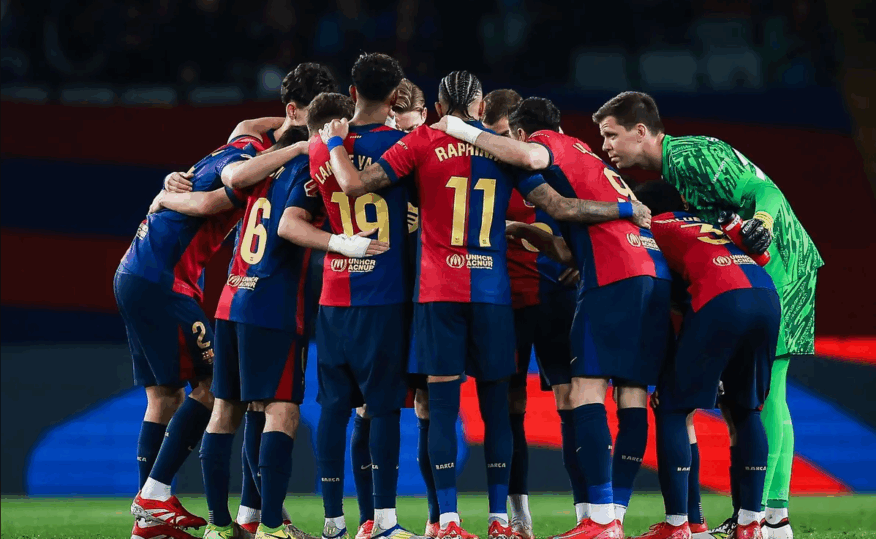
In saying that, Real Madrid have lifted with the signing of Kylian Mbappe and the rise of Vinicius Jr., and FC Barcelona might finally be at large again under Hansi Flick and the emergence of players like Lamine Yamal, Pedri, and Pau Cubarasi.
Despite these two teams looking dominant heading into the 2025/26 season, La Liga is still facing a crisis.
La Liga President Javier Tebas has been in hot water with both FC Barcelona and Real Madrid in the last season, with both clubs calling for his resignation in separate incidents.
Barcelona accused Tebas of providing false evidence against the club in the Negreira case, which saw them charged for alleged payments to referees.
The President was also at odds with Los Blancos for most of last season, as the club publicly slandered La Liga referees with accusations of corruption, which prompted Tebas to respond by calling them ‘a club that cries all day’.
Recently, a lawsuit has been filed against Tebas for serious offences that include revealing confidential information about FC Barcelona’s finances without permission.
In recent years, the relationship between Tebas and the two biggest clubs in Spain has been sour, which has only further damaged the reputation of harmony of the Spanish league.
As money plays an important factor in modern-day football, the essence of the Spanish game is being milked for profit, with La Liga moving the Spanish Super Cup to Saudi Arabia in a controversial deal between the Spanish Football Federation and the Middle Eastern nation.
This first occurred in 2020, and there’s no sign of the final returning to Spain.
Now that greed is creeping into the top-flight, with the Spanish FA approving La Liga games to be played in the USA. Why?
It is heavily rumoured that FC Barcelona’s Matchday 17 clash against Villarreal will be contested in Miami, instead of on home soil.
Another controversial and financially-driven decision that only damages the integrity of the league.
Not only that, but these clubs no longer seem to have the finances to compete with other leagues.
Barcelona have struggled over the last two seasons to register new players due to their ongoing financial issues.
This has made it difficult to make high-profile signings, forcing them to focus on loans or low-cost additions.
While the net spend during the 2025/26 transfer window was €1 billion in the Premier League, in La Liga, the net spend was only €28 million.
It’s not just Barcelona, but a majority of clubs in Spain who have issues registering new signings in La Liga due to their strict salary caps.
La Liga’s Financial Fair Play rules outline customised spending limits for each club, based on their revenue and debt.
Clubs can spend more when they’re earning more, which is difficult given that so many clubs are fighting debt.
It’s tough to be competitive when newly promoted Premier League clubs have more freedom to make signings than the best sides in Spain.
So, with La Liga steeped in constant controversies over the past few years, and their president finding his name in more headlines than Barcelona and Madrid, is La Liga starting to fall behind the other top five leagues?
Yes it is.
There’s no denying that it’s been a slow fall from grace for the division that once attracted the most high-profile footballers on earth.
The league that once saw the Premier League’s finest jumping at the opportunity to join Barca or Real in a glorious dynasty that coincided with the Spanish national team’s golden generation shining.
It’s hard not to feel nostalgic hearing the word ‘La Liga BBVA’ and picturing the old rainbow logo with a football in the centre.
The most iconic players in every position, and the best players in the world, all in the same league.
With a new generation of young Spanish footballers emerging in recent years, and the success of the Spanish national team, who won the Euros in 2024, the time is now for Spanish football to clean off the rust and return to the forefront of European football.
Real Madrid, whether they’re performing well or not, are always at the front of European football, but if La Liga is going to thrive again, sides like FC Barcelona, Atletico Madrid, Sevilla, Valencia, Real Betis, and the rest are going to need to bounce back and be competitive across the Conference League, Europa League, and Champions League.
Rivalries aside, La Liga thrives when Barcelona and Real Madrid are at their finest, and with Hansi Flick’s Blaugrana showing their new revolution last season, the time is now for these clubs to captivate and dominate the global stage again.
A new La Liga President and a total behind-the-scenes rebuild might also be helpful.